Geothermal Installation Drill Techniques For Ground Loops
By Marco Silva • 21st May
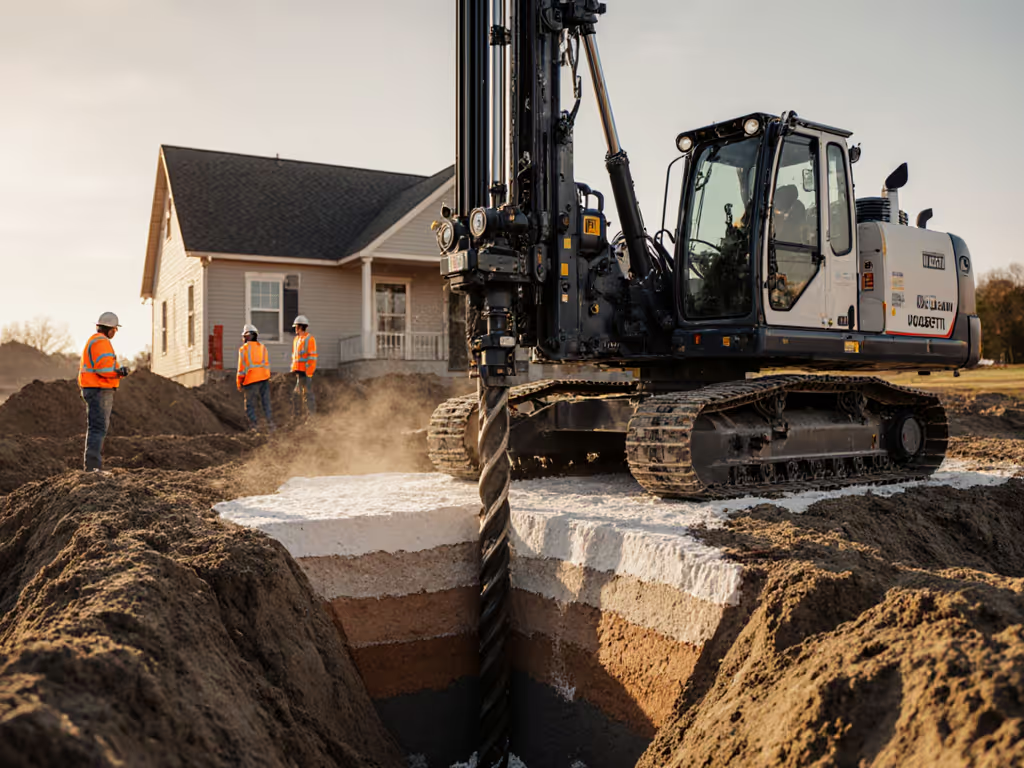
Getting geothermal installation drill techniques right is the difference between a system that quietly delivers for 25+ years and one that underperforms from day one. Whether you're a small contractor overseeing ground source heat pump drilling or a serious DIYer coordinating with a driller and doing your own header work, technique, tool choice, and ergonomics decide both system efficiency and how your body feels at the end of the shift.
Fatigue is a hidden cost; balance beats raw weight every day.
This guide walks through the drilling approaches for vertical and horizontal loops, how soil and rock change your strategy, and where ground loop installation tools and ergonomics fit into safe, efficient work.
1. Ground Loop Drilling: Why Technique Matters
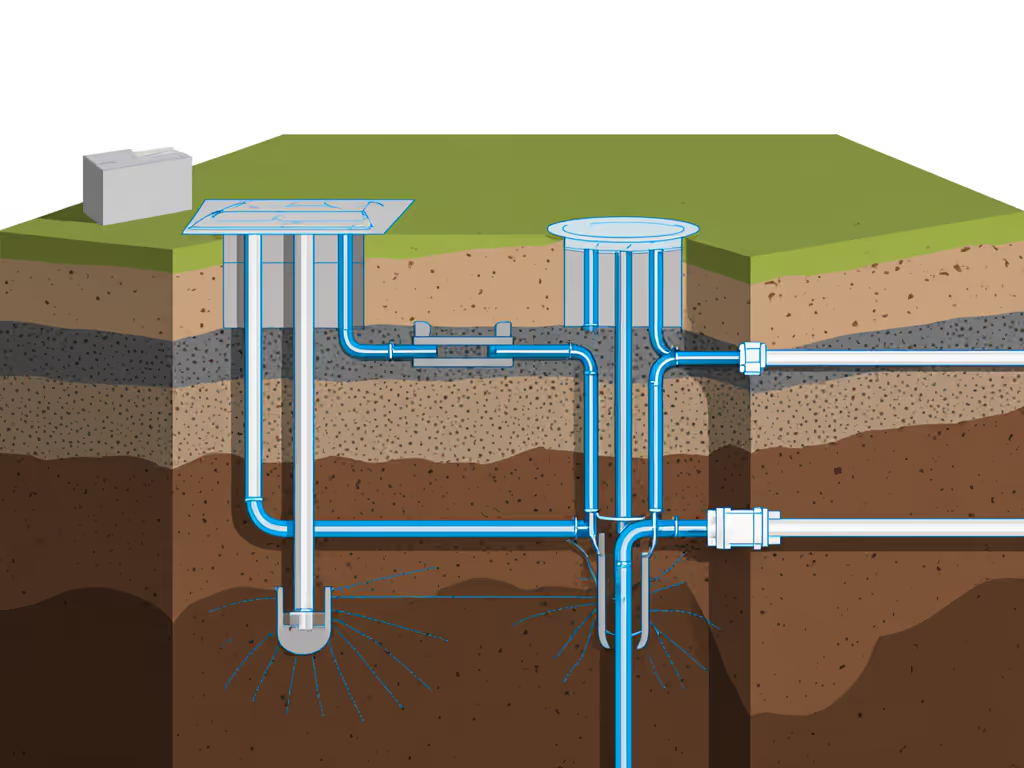
A closed-loop ground source system lives or dies on the quality of its ground contact. For precise handheld accuracy on anchors and manifolds, see our drill calibration guide to prevent drift and depth errors.
Good drilling and borehole construction:
- Achieve the designed loop length in realistic geology
- Keep bores straight and correctly spaced for heat transfer
- Allow proper grouting and backfill, eliminating air pockets
- Minimize loop damage, kinks, and stress points
Poor drilling and backfill can lock in higher pump power consumption for decades. Once the loops are buried and headers poured in, fixes are expensive.
Two big families of approaches dominate:
- Vertical bores using dedicated geothermal borehole techniques (mud rotary, air rotary, sonic)
- Horizontal loop drilling methods (trenches, chain or wheel trenchers, or directional drills)
Your job isn't just choosing a rig; it's matching the technique to soil, access, and crew capability.
Reach matters more than specs: if a method or tool forces strained postures or unsafe leverage, you will pay in mistakes and injuries.
2. Choosing a Drilling Approach by Site
Vertical Boreholes (Typical for Tight Sites and Larger Loads)
For many residential and light commercial systems, vertical loops are the only practical option. Typical patterns:
- Depth: ~150-400 ft per bore (often ~180-220 ft per ton of design load; local geology dominates)
- Diameter: ~4-6 inches
- Spacing: 15-20 ft between bores to avoid thermal interference
Common geothermal borehole techniques include:
- Mud rotary drilling
- Best for unconsolidated formations (clays, sands, mixed soils)
- Drilling fluid (bentonite-based) stabilizes the hole and carries cuttings out
- Delivers relatively straight holes with good wall support
- Air rotary / down-the-hole (DTH) hammer
- Suited to rock or hard formations
- Compressed air clears cuttings; hammer action fractures rock ahead of the bit
- Very effective in competent rock but loud, with more vibration and rig wear
- Sonic drilling (less common but growing)
- Uses high-frequency vibration to advance casing and bit
- Very clean cuttings return, excellent core samples
- Good in mixed or difficult formations but requires specialized rigs and training
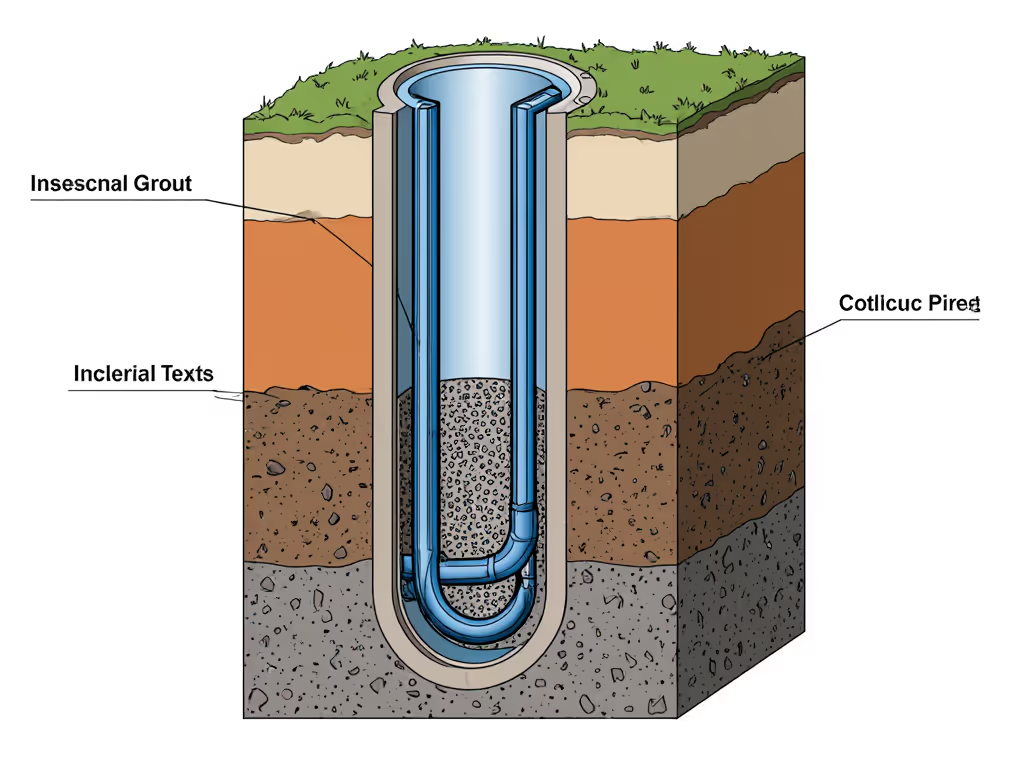
After drilling, you:
- Install the U-bend polyethylene loop
- Center pipe (spacers help)
- Pump in thermally conductive grout from bottom up to eliminate voids
Any collapse, bridging, or poor cleaning in the hole makes grouting uneven and hurts heat exchange.
Horizontal Loop Drilling Methods (Space-Rich Sites)
If you have land, horizontal loops can be more accessible:
- Open trenches
- Typically 4-6 ft deep, depending on frost line
- Loops laid straight or in "slinky" coils
- Installed with: backhoe, mini-excavator, chain trencher
- Simpler to understand and verify visually
- Horizontal directional drilling (HDD)
- Pilot bore from entry to exit pit
- Ream to final diameter while managing drilling fluid
- Pull back loop pipe
- Minimal surface disruption; ideal under driveways, landscaping, or existing structures
HDD requires tight control of fluid pressure and bore path to avoid frac-outs and pipe stress. It's often subcontracted to experienced drillers.
For most prosumers, vertical drilling and HDD should be handled by licensed well or geothermal drillers. Where you come in is understanding the methods, staging the site, and safely handling the header tie-in and inside work.
3. Soil-Specific Drilling For Geothermal
Soil-specific drilling for geothermal is about matching bit, drilling fluid (if used), and method to what's under your boots.
Soft Clays and Silts
- Preferred methods: Mud rotary or trenching
- Risks: Borehole collapse, swelling clays, slow cuttings return
- Controls:
- Maintain consistent mud weight/viscosity
- Don't over-enlarge the hole; it eats grout and can destabilize walls
- For trenches, avoid leaving steep, unsupported sidewalls for long
Sands and Gravels
- Preferred methods: Mud rotary with good fluid control; HDD with effective drilling fluid
- Risks: Lost circulation, collapse, washouts
- Controls:
- Monitor return flow and adjust fluid density
- Maintain steady penetration rate; avoid pausing too long in one depth zone
- Use centralizers on loops to prevent contact with rough walls
Glacial Till / Mixed Ground
- Preferred methods: Robust mud rotary or air rotary with careful bit selection
- Risks: Abrasive wear, unpredictable drop into boulders or lenses
- Controls:
- Start conservatively on bit weight and RPM
- Expect variable penetration rates; guard against impatience-driven overloading
Soft Rock (Shale, Limestone)
- Preferred methods: Air rotary or DTH hammer, sometimes mud rotary
- Risks: Sloughing of shale, fractured zones that drink fluids
- Controls:
- Adjust energy and air volume to maintain cuttings lift
- Case through weak layers if repeated collapse occurs
Hard Rock (Granite, Basalt)
- Preferred methods: DTH hammer
- Risks: High vibration, tool wear, slower progress
- Controls:
- Maintain straight bores; monitor deviation
- Rotate operators to manage exposure to vibration and noise
Across all conditions, documenting penetration rate, bit life, and fluid use per bore is a people-first metric: it lets you plan realistic crew hours and reduces overwork.
4. Ground Loop Installation Tools & Ergonomics
The big rig gets the attention, but the small tools around the loop can chew up your body if you ignore ergonomics.
Rig-Side Work: Managing Hoses, Rods, and Staging
Key stressors:
- Repetitive lifting of drill rods and casing
- Dragging heavy, mud-filled hoses
- Twisting while bent to manage cuttings
Mitigation strategies:
- Stage rods and pipe at waist height using racks instead of ground-level piles
- Use rod handlers or clamps whenever available; avoid "hero" lifting
- Plan hose routes with minimal crossing and tripping hazards
- Rotate tasks between crew (controls, rods, mixing) to spread load
Handheld Drilling: Headers, Penetrations, and Manifolds
Inside work for ground source heat pump drilling (core holes through foundations, anchor points, manifold racks) often happens in cramped basements or mechanical rooms. For tool selection on this kind of masonry work, check our pro-tested best rotary hammer drills for concrete guide.
Guidelines:
- Choose balanced drills over raw torque monsters
- For most foundation penetrations, an SDS-max rotary hammer on a stand is safer than a giant handheld core drill at awkward angles.
- Look for effective anti-kickback features and side handles that can be gripped neutrally.
- Use stands and rigs whenever possible
- Clamp core rigs to the wall/floor; avoid freehand core drilling through masonry. If you need a quick refresher on alignment without a drill press, our step-by-step on drilling straight holes applies to manifold and anchor work.
- Let the machine handle alignment so you're steering, not wrestling.
- Prioritize neutral wrist positions
- Align side handles so wrists stay straight, especially when drilling overhead or at shoulder height.
- If you're reaching beyond a comfortable forearm length, rethink the setup (extensions, platforms, or repositioning). Again: reach matters more than specs.
- Cadence beats brute force
- Short, controlled drilling bursts with breaks to clear dust and reset stance reduce risk.
- An apprentice once spent a morning overhead with a heavy drill and no side handle; his wrist told the story. Once we shortened the head, balanced the tool, and fixed his cadence, the pain faded and his output went up.
Fatigue is a hidden cost; balance beats raw weight every day.
That principle applies as much to geothermal work as to any other drilling: the system doesn't care how "macho" the tool was, only that the holes are clean, accurate, and repeatable.
5. Safety-Forward Checklist for Geothermal Drilling Work
Before rigs or drills spin, lock in these basics:
- Utility locates complete and visible on-site
- Bore/loop layout painted or flagged with depths and separations noted
- PPE: eye/face protection, hearing protection, gloves, appropriate boots; respirator when around dust or grout
- Kickback planning:
- Always use auxiliary handles on handheld drills
- Set rotation speed and impact mode appropriate to bit size and material Dialing in the drill clutch settings will also reduce stripped fasteners and kickback.
- Vibration and noise controls:
- Enforce breaks and operator rotation on DTH and heavy hammer tools
- Track exposure times, not just completed holes
- Mud and cuttings management:
- Containment berms or tanks in place
- Clear walk paths, no hoses buried in slurry
- Emergency plan:
- First aid kit, communication, and clear route for EMS
- All crew know shutoff points for rigs and pumps
No tonnage of loop capacity is worth a back injury or a kickback incident. Before any handheld work near foundations or manifolds, review our power drill safety guidelines.
6. Planning for Productivity and Reduced Fatigue
A safety-forward, analytical approach actually speeds jobs up.
Estimate Drilling Metrics Upfront
Work with your driller (or your own logs) to define:
- Average penetration rate per formation (ft/hr)
- Rod handling time per stand
- Grouting time per bore
From that you can model:
- Boreshift capacity (e.g., 2-3 250-ft bores per rig per day in mixed ground)
- Crew rotation schedules that keep each operator under your vibration and lifting thresholds
Integrate Ergonomics into Job Planning
- Assign the lightest, most balanced tools to overhead and ladder tasks
- Reserve heavier drills for low, braced, chest-level work
- Plan platforms or scaffolds where repeated penetrations are needed rather than working from ladders all day
This isn't comfort for comfort's sake. Over a multi-week job, reduced fatigue means fewer errors, cleaner grout logs, and better adherence to design depths.
Summary and Final Verdict
For ground loops, drilling technique is not a background detail. It's the backbone of system efficiency and crew safety.
- Vertical boreholes rely on well-chosen geothermal borehole techniques (mud rotary, air rotary, or sonic) matched to geology, with clean cuttings removal and full, void-free grout.
- Horizontal loop drilling methods (trenches and HDD) trade depth for length, demanding careful control of sidewall stability, bore path, and pipe handling.
- Soil-specific drilling for geothermal is about respecting what each formation can and can't do: clays swell, sands collapse, rock vibrates; your bit, fluids, and expectations must adjust.
- Around the rig, ground loop installation tools and techniques should be selected for balance and reach, not just power. Side handles, stands, task rotation, and realistic cadence protect both quality and bodies.
If you take one thing into your next project, let it be this: choose your drilling method and tool setup as carefully as you choose your heat pump. The ground will be there for decades; your crew needs to be, too.
Related Articles