Circular Economy Power Tools: Extend Lifecycle, Cut Waste
By Amina Okafor • 3rd Mar
Tools sit idle. Batteries degrade in drawers. Chargers multiply. Crews wait for replacements. Sound familiar? The traditional linear approach to circular economy power tools treats each tool as disposable (use it until it fails, replace it, repeat). But sustainable tool lifecycle thinking flips that model. Instead of chasing specs and replacing equipment every few years, you standardize platforms, repair strategically, recycle responsibly, and design workflows that keep tools and batteries in service longer. The payoff: fewer dead-tool moments, lower total cost of ownership, and crews that trust their inventory.
Why Circular Economy Thinking Matters for Your Tools
The circular economy is fundamentally a regenerative system that reduces waste and keeps resources in use for as long as possible, fundamentally shifting away from the "take-make-waste" model that defines most tool purchases. For crews and serious DIYers, this isn't abstract environmentalism, it is operations efficiency.
Consider the math. The traditional linear model extracts raw materials, manufactures a tool, it gets used, then discarded. Each step consumes energy and generates emissions. By contrast, a circular approach extends product lifecycles through repair and refurbishment, remanufactures worn-out components, and recycles materials back into new tools. For practical upkeep steps, use our Power Drill Maintenance Guide. The result? Circular models help curb greenhouse gas emissions by reducing the energy-intensive processes associated with raw material extraction and production. For context, extending the life of power tools by just one or two years (similar to how smartphone longevity reduces emissions) compounds savings across a fleet.
But the real driver for most operations is this: uptime beats peak specs. A tool that lives longer is a tool you don't need to replace mid-project. A standardized battery platform means one charger per crew instead of three. Mixed platforms mean shuffling packs and waiting for charge cycles. A coherent ecosystem (repair pathways, take-back programs, standardized packs) keeps crews productive and reduces the hidden costs that compound over 2 to 5 years.
Batteries are a workflow, not accessories. Plan them like materials.
The Business Case: Cost Savings and Supply Chain Resilience
Circular practices reduce the cost of materials and waste disposal for businesses (a savings opportunity projected to reach $640 billion by 2050). For tool operations, that translates to:
- Fewer replacement cycles: Repairing a drill motor or swapping worn brushes costs far less than buying a new unit. Designing tools for modularity makes this economically viable.
- Lower battery inventory costs: Take-back and refurbishment programs mean you're not constantly purchasing new packs; certified remanufactured batteries restore units to near-new condition at 20 to 40% cost savings.
- Reduced waste fees: Responsible recycling of dead batteries and tool housings avoids landfill charges and regulatory fines.
- Supply chain stability: Circular systems reduce reliance on virgin inputs and global supply chains, making businesses less vulnerable to resource scarcity and price volatility. When your crews standardize on one platform, you're not chasing three different suppliers or panicking when a preferred model goes out of stock.
Building a Sustainable Tool Lifecycle: Key Practices
Tool Repair and Refurbishment Programs
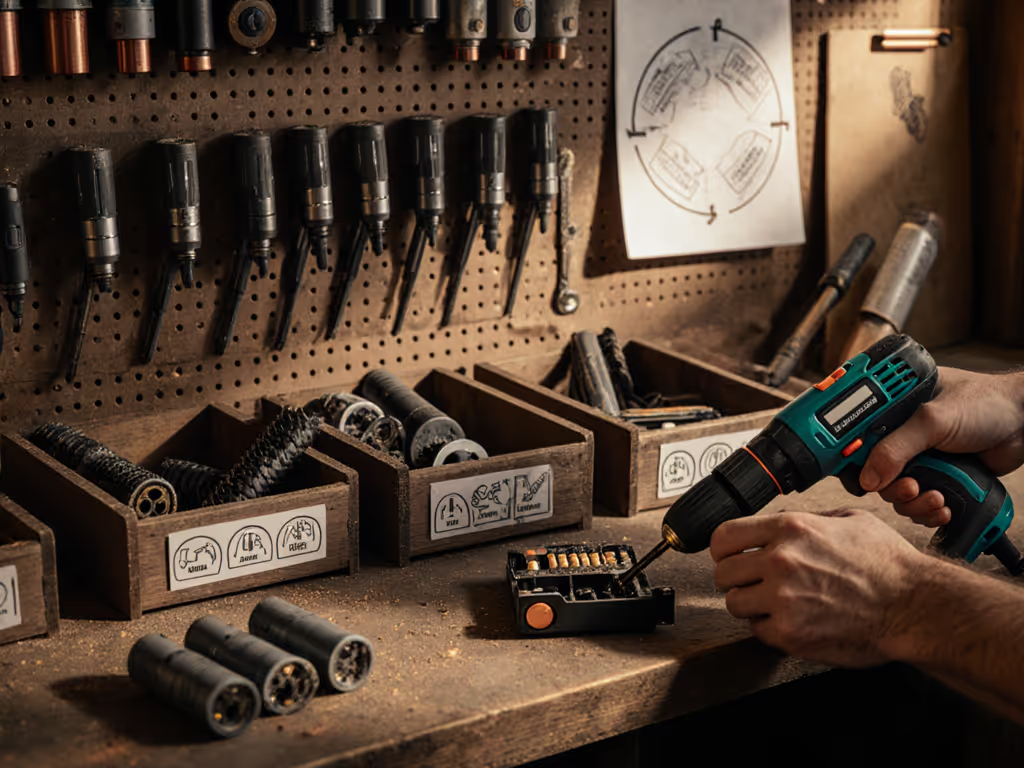
Repair isn't a niche feature, it is operational insurance. When a drill chuck fails or a motor burns out, a repair-first mindset beats "just buy another one." Design for repairability matters here: modular batteries that disconnect from housings, standard fasteners, and documented service paths make repairs faster and cheaper. Forward-thinking manufacturers support this through official repair centers and parts availability. For crews managing multiple tools, negotiate service partnerships; you'll see faster turnarounds and better cost controls than sending tools to big-box retailers for third-party repair.
Power Tool Recycling and Battery Take-Back Programs
Battery take-back programs close the loop on one of the most resource-intensive components. Lithium-ion cells contain copper, cobalt, nickel, and aluminum (all recovered through certified recycling). A responsible circular model means your old packs don't end up in a junk drawer; they're collected, sorted, and either remanufactured or fully recycled. Many manufacturers operate mail-back or drop-off programs (often free or low-cost with proof of purchase of replacement packs). Compare options with our battery recycling programs guide. This reduces environmental harm and ensures that rare materials re-enter production cycles instead of landfills. For crews, it's a simple checklist: when packs reach end-of-life (usually after 300 to 500 charge cycles), they go to the program, not the trash.
Standardization as a Workflow Engine
Mixed platforms are a silent productivity drain. I saw this firsthand running three crews on a school retrofit. We had DeWalt here, Makita there, Milwaukee somewhere else. Mid-morning, Crew A's drill died; batteries from Crew B didn't fit. We had three chargers, two trucks, and constant shuffling. The moment we standardized everything to one platform (same battery form factor, same chargers) dead-tool moments vanished. One battery cart replaced three. That single decision recovered eight hours per week.
Standardization works because:
- One charging station replaces many: A crew with five tools on the same platform needs one or two fast chargers, not one per tool.
- Batteries rotate efficiently: Instead of hoarding packs for each tool, crews manage a smaller, shared pool that rotates through a predictable charge schedule.
- Training and safety are consistent: Crews know one trigger, one auxiliary handle position, one battery insertion method. Mistakes and fatigue drop.
- Spares and backups shrink: You buy fewer batteries and chargers because they cross-assign seamlessly.
Eco-Conscious Tool Ownership: Planning Long-Term
Eco-conscious tool ownership isn't about buying premium or green-labeled tools; it's about buying strategically and keeping gear in service.
Step 1: Choose a platform with a credible ecosystem path. Before buying your first tool, verify that the manufacturer offers a clear roadmap: which battery models work across drills, saws, sanders, and future tools? Check availability of repair parts and documented service intervals. Avoid one-off hero tools that don't integrate with a broader platform.
Step 2: Right-size your initial purchase. Don't overbuy batteries and chargers on day one. Start with a core kit (drill, charger, one or two packs), add tools gradually as projects demand, and expand the battery bank when you have real runtime data. When planning packs and chargers, see our battery kits guide to match runtime with workload. This spreads cost, keeps inventory lean, and lets you adapt the platform to actual workflows instead of guessing.
Step 3: Plan for battery rotation. Most lithium-ion packs stay usable for 3 to 5 years if you rotate them (avoid leaving one pack in the charger indefinitely) and store them at moderate temps. Use a simple log: mark packs with purchase date, log charge cycles, and retire them to take-back programs when capacity drops noticeably (typically after 300 to 500 cycles or when runtime falls below 60% of new specs).
Step 4: Budget for repair, not just replacement. Set aside 5 to 10% of your annual tool spend for maintenance and repairs. This makes sense economically: a $50 motor replacement beats a $300 new tool. It also keeps crews adaptable; if a drill needs a week's service, you have budget to rent a backup without derailing timelines. For short-term gaps, our power tool rental comparison helps avoid overbuying while keeping jobs on schedule.
Planning Crew Standardization: A Checklist
For teams rolling out standardization, use this framework:
- Audit current inventory: List every tool and battery brand in use. Tally downtime incidents tied to incompatibility, dead batteries, or missing chargers.
- Define platform criteria: Which tools do your crews actually use? Drills, saws, nailers, impacts? Identify a single platform that covers 80 to 90% of those needs; don't force niche tools onto the platform.
- Calculate battery demand: Map typical job duration, workload intensity, and charging windows. If crews work 8 to 10 hour days, how many packs per tool type do you need to avoid idle time? Build in 20% buffer for bad-weather days, peak seasons, or parallel crews.
- Consolidate chargers: Replace multiple slow chargers with one or two fast models, placed at natural crew staging areas (shop, vehicle, site trailer).
- Label and serialize: Mark every battery and charger with crew name or ID. Theft risk drops when gear is visibly assigned; accountability improves maintenance.
- Set maintenance touchpoints: Weekly battery health checks (any visibly swollen packs?), monthly terminal cleaning, annual deep inspection. Preventive care extends lifespan and prevents field failures.
- Establish take-back routing: Identify your recycling partner before packs go dead. Post the drop-off location and process in your shop.
The Workflow Integration: Putting It Together
Circular thinking shines when embedded into real workflows. Plan charging as part of material logistics, not an afterthought. If a job runs two days, schedule overnight charging; if it runs five days, factor in midday top-ups or rotating packs. Use battery condition (state-of-charge, cycle history) as one input to crew assignments, and don't send a team with depleted packs to a remote site.
Reduce risk by treating batteries like consumables that have a documented lifespan and retirement path. Over a 3 to 5 year horizon, the platform + spares + repairs + recycling becomes predictable and far cheaper than the "buy new whenever" model. Crews gain confidence in the system, reduce anxiety about breakdowns, and focus on the work itself.
Where to Explore Further
Standardizing your tool ecosystem and embedding circular practices isn't a one-time purchase. It is a platform shift. Start by clarifying your platform of choice, auditing battery demand, and mapping your repair and take-back partnerships. Look for manufacturers with transparent lifecycle data, documented repair support, and established recycling programs. Connect with other crews or contractors running similar platforms; real-world runtime and maintenance feedback beats marketing claims every time.
The payoff (lower downtime, simpler workflows, confident teams, and measurable cost savings) compounds over years. Batteries are logistics; treat your platform like an operations decision, not a tool collection.
Related Articles