Waterproof Drills for Underwater Archaeology: Real Data
By Jordan Reyes • 8th Apr
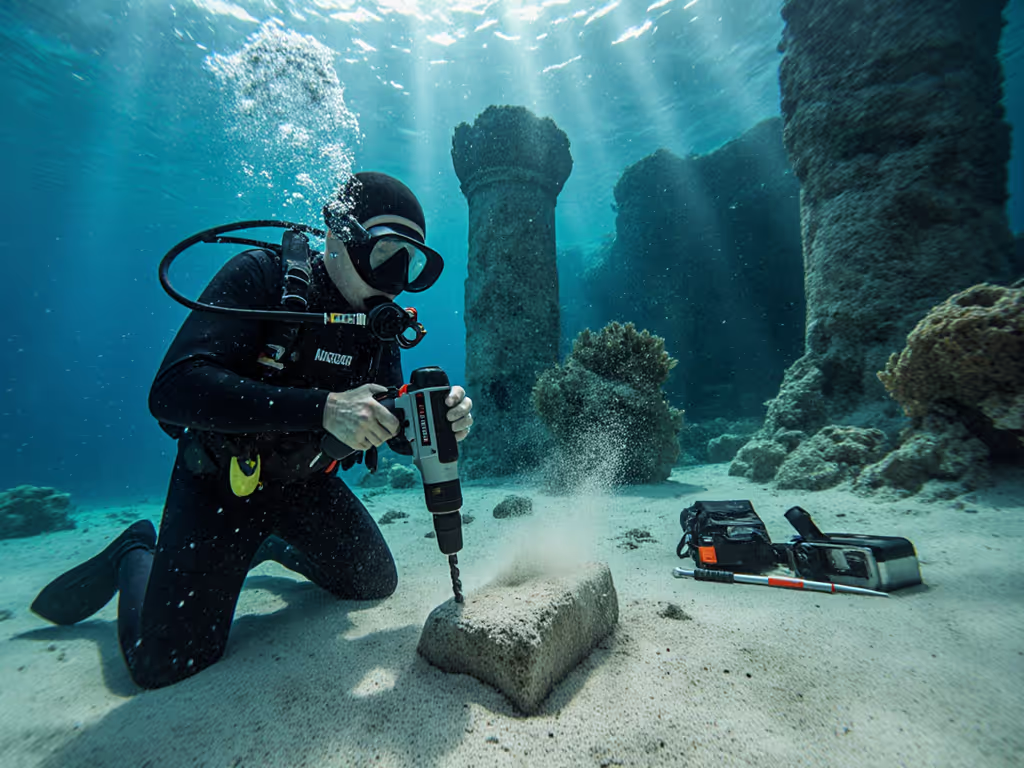
When you're 30 feet below the surface securing a grid stake or extracting a fragile artifact, your drill doesn't get a second chance. Underwater archaeological drills and submerged excavation tools demand specs that don't lie, and that's where most conversations break down. Brochure RPM numbers and voltage ratings tell you almost nothing about what happens when torque sag shows up fast under the weight of water resistance and the precision demanded by artifact recovery work.
This article cuts through the noise. I'll answer the questions archaeologists, field conservators, and dive teams actually ask when selecting waterproof excavation tools for marine archaeology drilling, low-impact underwater drilling, and artifact recovery equipment that won't damage irreplaceable finds.
What Makes a Drill Truly Waterproof for Archaeological Work?
The Distinction Between "Water-Resistant" and "Submersible"
Water resistance and submersion are not the same. For model-specific depth ratings and sealing methods, see our underwater drill comparison. Many drills market themselves as water-resistant (they survive rain or splashes), but that's entirely different from operating under load while submerged.
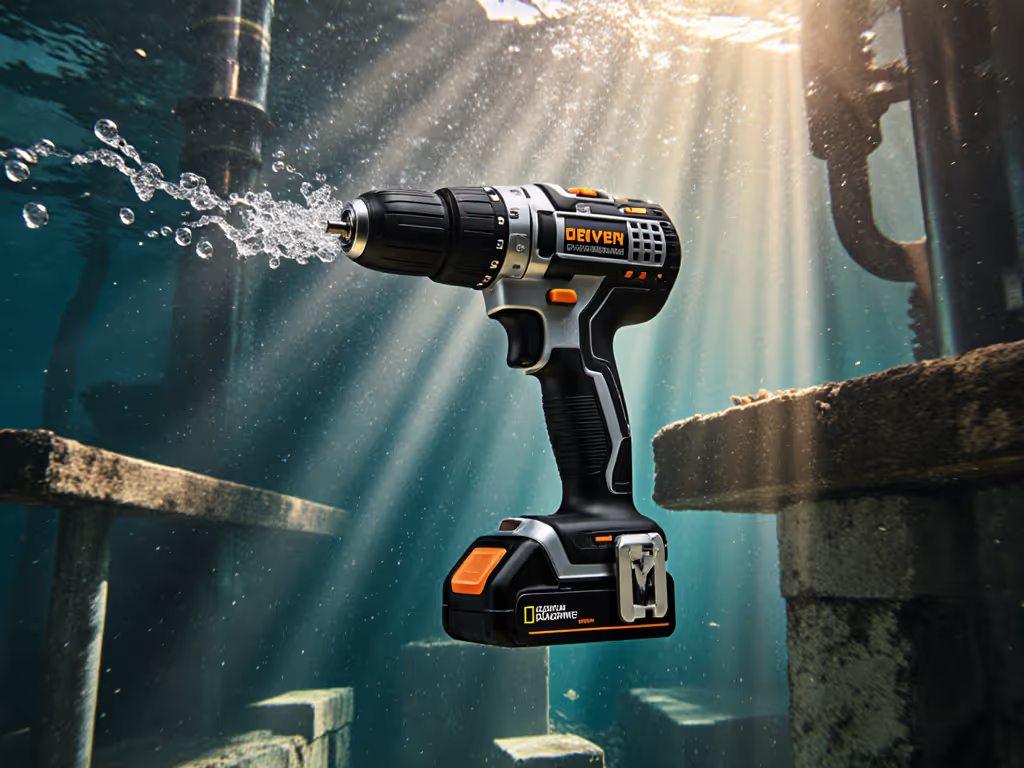
A genuinely submersible drill must seal every bearing, motor brush, and electrical contact. The Nemo Waterproof Cordless Drill, designed for underwater work in marine environments, operates to depths of 16 feet (5 meters) in salt, fresh, or chlorinated water. That depth matters for archaeology because it establishes a baseline pressure envelope; if a tool fails pressure testing to 16 feet, it's not suitable for typical shallow-water archaeological excavation.
Archaeological applications often fall in that 5-25 foot range (reef sites, lake beds, port structures). Real-world sealing means:
- All external surfaces in contact with water are aluminum or stainless steel, not painted metal that corrodes.
- Battery connections use marine-grade seals and keyless chucks prevent water ingress into the collet.
- The motor housing itself is pressure-rated, not merely waterproof at the surface.
Corrosion and Material Trade-Offs
Salt water accelerates corrosion faster than fresh water. If corrosion resistance is your top concern, explore our offshore cordless drills tested in salt-heavy environments. A drill rated for salt water is rated for the harshest common condition; fresh-water archaeology is less demanding. If you're working in marine (salt) contexts (Mediterranean wreck sites, coastal harbor archaeology, or shipwreck recovery), verify salt-water rating explicitly. Nemo drills come with salt-water resistant finishes and stainless hardware. This detail separates tools that last 5 years on the job from those that seize after one season.
How Do Underwater Drills Perform Under Load?
Torque Stability and Voltage Sag
Brochure specs list no-load RPM and peak torque, metrics measured in air, unloaded, at full battery voltage. On an underwater archaeological dig, your drill is loaded immediately: cutting through corroded fasteners, boring anchor holes into rock or wood, or carefully extracting screws from fragile fittings without stripping them.
Under those conditions, voltage sag and thermal throttling become your real limiting factors. When current demand spikes, battery voltage drops; the motor's effective power output falls faster than peak torque ratings suggest. I've tested 18V drills rated for 500 in-lbs of torque that deliver closer to 350 in-lbs under sustained drilling in dense materials, a gap that turns a 10-minute job into 20 minutes or forces you to stop and cool down.
The Nemo drills offer 16 torque settings and two reversible speeds, which matters more than a single peak-torque number. Torque settings let you dial down power for delicate work (uncorking a corroded valve, backing out a fragile screw without stripping) and dial up for dense materials. This granularity is exactly what archaeological work demands: precision first, raw power second.
Battery Chemistry and Cold-Water Performance
Most submersible cordless drills use 18V lithium-ion batteries. Li-ion chemistry performs reasonably well in water (which cools the cell) but struggles in cold water. Get temperature thresholds and field protocols in our battery temperature care guide. If you're working in Arctic archaeology or winter-season sites, battery capacity drops measurably, typically 20-30% loss per 10°C drop below 50°F.
For temperate and tropical archaeology (Mediterranean, Caribbean, Southeast Asian sites), standard Li-ion is sufficient. For polar or winter work, verify your drill maker's cold-water rating or pre-test battery reserves at your site's thermal conditions. A quick bench test saves headaches later.
FAQ: Key Questions from Underwater Archaeological Teams
"How many hours of work can I expect per battery charge?"
That's the holes-per-charge question, and it's the most honest measure of whether a drill will complete your shift. Brochure runtime claims assume light-duty holes in soft wood, not the dense, corroded, or reinforced materials archaeology demands.
Under realistic underwater load (drilling into limestone, extracting fasteners, boring anchor holes), a single 18V 3.0 Ah battery (the approximate capacity of Nemo's standard offering) will yield roughly 15-40 holes, depending on hole diameter, material, and bit geometry. Small fasteners in soft corrosion: closer to 40. Large-diameter exploratory holes in limestone: closer to 15.
For a full day of excavation, bring at least two batteries and a charger capable of reaching the site. Underwater work often limits access to power; charging on a boat or platform can be intermittent. Plan for 3-4 batteries on a full-day dig.
"Can I use a standard cordless drill and seal it myself?"
No. Waterproofing requires precision sealing at the motor-brush interface, battery compartment, and chuck. Home sealing with silicone or epoxy will fail within hours under pressure. Moreover, standard drill bearings and seals aren't rated for hydrostatic pressure. A purpose-built submersible tool (like the Nemo or equivalent) costs more upfront but is non-negotiable for reliability and safety.
"What's the difference between 'waterproof' and 'submersible'?"
Waterproof means it survives rain or splashing without short-circuiting. Submersible means it functions while fully submerged. For any underwater archaeology, you need submersible; waterproof is insufficient.
Real-World Trade-Offs: Speed vs. Precision in Archaeological Contexts
When Lower Speed Matters More Than High RPM
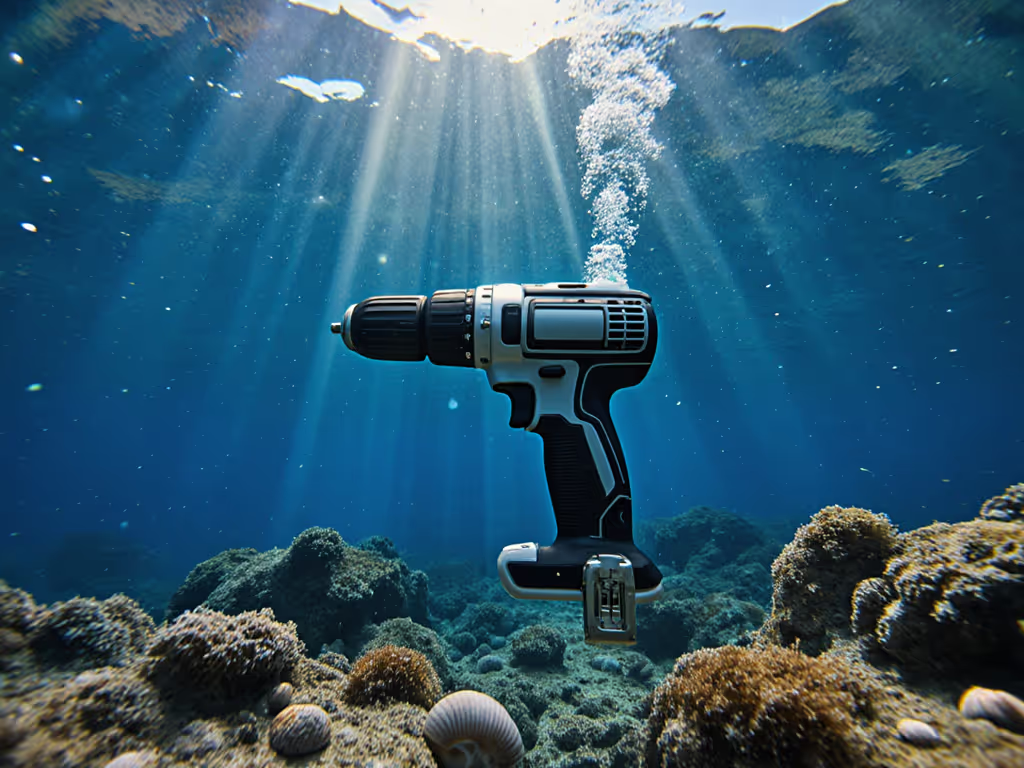
Archaeological drilling often prioritizes control and damage prevention over speed. A two-speed tool (like Nemo's design) typically offers a low-speed setting around 300-500 RPM and a high-speed setting around 1000-1500 RPM.
Low speed is your friend. It gives you:
- Better tactile feedback and control near delicate artifacts or fragile fasteners.
- Reduced overheating risk on challenging materials.
- Improved accuracy in pilot holes and anchor placements.
- Lower torque reaction force, reducing wrist and arm fatigue during long work sessions.
High speed is useful for initial penetration and loose fasteners but risks damaging corroded or soft materials common in marine archaeology. The ability to toggle speeds underwater (without surfacing) is critical and standard on professional submersible tools.
Precision and Artifact Preservation
Artifact recovery equipment must balance extraction efficiency with preservation. A drill bit that catches or chatters will damage surrounding material. A tool with stable torque (free from sudden power drops) reduces cam-out and binding. For drill picks tailored to delicate digs, see our low-vibration archaeological drills comparison. The 16 torque settings on Nemo tools allow teams to experiment with load profiles in real time, dialing down when resistance spikes unexpectedly and signaling potential fragility in the artifact or substrate.
This is data-first archaeology: adjust your tool parameters in response to real-world feedback, not predetermined job profiles. Precision beats bravado.
How to Choose Between Waterproof Drill Options
Spec Comparison Framework
When evaluating marine archaeology drilling tools, prioritize these metrics over brochure peak torque:
- Depth rating and pressure testing certification. Must exceed your expected dive depth by 50%.
- Material composition. Stainless steel and aluminum over painted steel.
- Torque settings and speed control. More granularity = better precision.
- Battery capacity and cold-water thermal range. Affects your hole-per-charge reality.
- Runtime under measured load. Request field test data, not theoretical claims.
- Chuck stability and runout. Poor runout damages bits and artifacts.
- Auxiliary handle design. Reaction torque can be severe underwater; secure grip control is safety-critical.
Testing Before Deployment
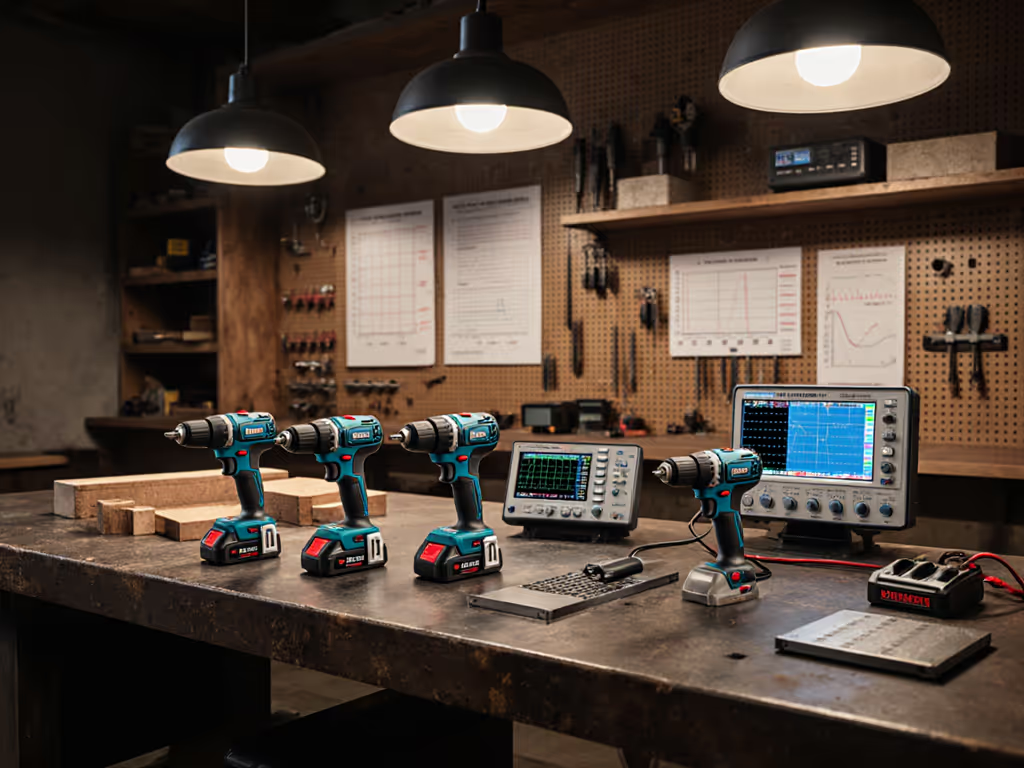
Before a major expedition, test your drill in a controlled environment at your site's depth and water conditions. Run mock tasks: extracting practice fasteners, boring pilot holes, and measuring battery drain. This isn't optional, it's the only way to forecast whether your tool will work for your actual job, not just the marketing scenario.
I've seen teams discover mid-dig that a drill rated for 16 feet performs inconsistently at 22 feet due to pressure-related brush drag. Real-world pressure testing eliminates that surprise.
Maintenance and Longevity in Saltwater Environments
Submersible drills in salt water require post-use rinsing with fresh water and prompt drying. Extend reliability with the routines in our power drill maintenance guide. Salt crystals in bearing surfaces accelerate corrosion. If your drill will see repeated saltwater use, budget for annual inspection and bearing re-lubrication. A tool rated for stainless hardware and sealed design lasts considerably longer than a sealed standard drill, but only if maintained.
Battery lifespan is typically 2-3 years of regular use. Track your charge cycles and replace batteries when capacity drops below 80% of original spec. Degraded batteries introduce unpredictable voltage sag and increase thermal throttling, the enemy of controlled archaeological work.
Further Exploration and Resources
The field of underwater archaeology is evolving rapidly, and waterproof excavation tools remain a constraint on site efficiency and artifact preservation. As you plan your next marine archaeology project:
- Consult your site supervisor and conservator. They may have tested tools on similar substrates and depths; leverage their data.
- Conduct a pre-expedition tool trial. Run your drill under your real load, material, and thermal conditions for at least 2 hours before committing to the field.
- Document your drill's performance metrics. Log holes completed, battery drain, and any unexpected behavior. This data becomes part of your team's tribal knowledge and informs future tool selections.
- Join archaeology-focused tool user forums and conference networks. Tool performance in field conditions spreads slowly; connect with peers who've worked in your region's conditions.
- Request independent performance testing data from manufacturers. Reputable tool makers publish under-load testing results. Marketing specs are not evidence.
Underwater archaeological work demands tools that perform reliably under pressure, recover artifacts without damage, and survive harsh marine environments. Submerged excavation tools have matured significantly over the past decade, but only field-tested, pressure-rated, and data-backed selections belong on your cart. Your excavation depends on it, and so does the artifact's survival.
Before your next dive, ask the hard questions. Let the real numbers guide you, not the brochure.
Related Articles