Solid-State Power Tool Batteries: Real-World Comparison
By Casey Bennett • 7th Jan
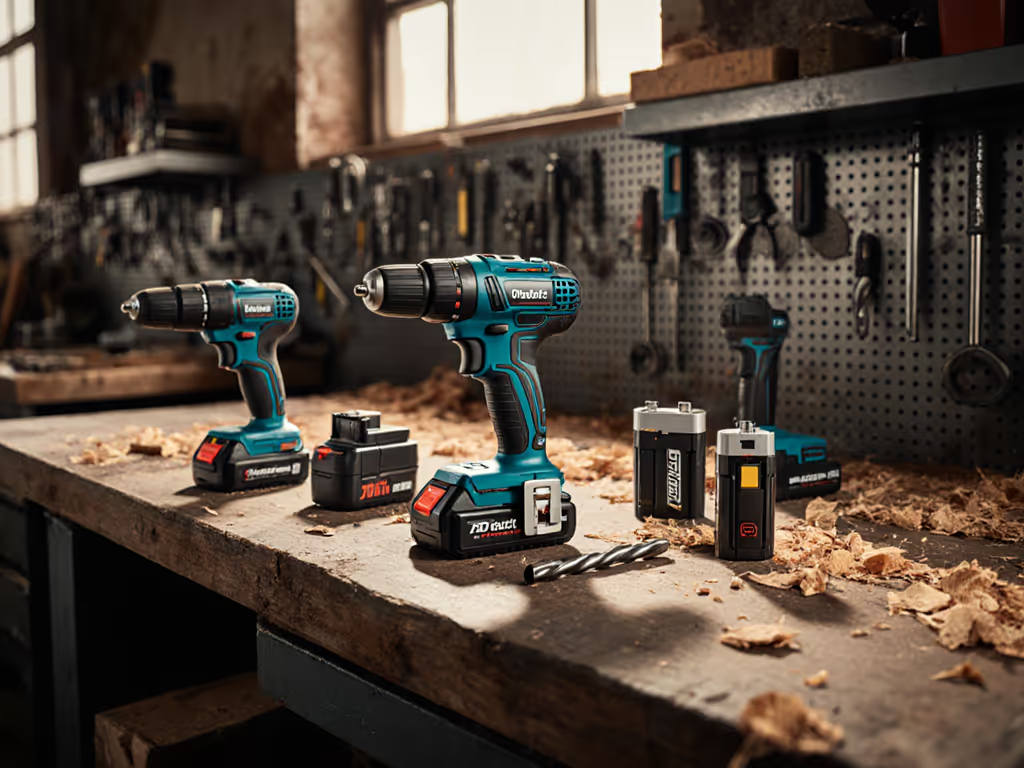
If you've heard the buzz about solid-state power tool batteries, you're not alone. But here's the honest truth for DIYers and pros: while solid-state technology is making headlines in electric vehicles, we're still waiting for it to power our drills and saws. Don't let the marketing noise confuse you. Today's cordless tools still rely on advanced lithium-ion chemistry. For a deeper dive into emerging chemistries, read our solid-state myth vs data explainer. But what if I told you that understanding where battery tech is heading could help you make smarter choices right now? Let's cut through the hype and build a practical framework for evaluating batteries based on your actual projects. Remember my neighbor who avoided fixing his bookshelf after stripping screws? He thought his drill was the problem until we dialed in his clutch and used the right bits. Win the first hole, and confidence follows.
Why Solid-State Isn't In Your Workshop Yet (But Will Change Everything)
What Exactly Is Solid-State Technology?
Solid-state batteries replace the liquid electrolyte in traditional lithium-ion cells with a solid material (like swapping water for gel in a balloon). This seemingly small change unlocks massive potential:
- Higher energy density (400 Wh/kg vs 250 to 300 Wh/kg in current premium tool batteries)
- Faster charging (minutes instead of hours)
- Longer lifespan (up to 100,000 cycles vs 1,000 to 2,000 for lithium-ion)
- Better temperature stability (works reliably from -30°C to 100°C)
While Donut Lab recently demonstrated solid-state batteries in Verge Motorcycles at CES 2026, power tool manufacturers are still testing prototypes. The jump from EVs to compact drill batteries requires solving unique challenges like vibration resistance and miniaturization.
Why You Shouldn't Wait for the "Perfect" Battery
I get why you're tempted to hold off on new tools: what if solid-state arrives next year? But here's what seasoned contractors know: your current projects need solving today. At a recent workshop, a carpenter told me he'd postponed buying a new impact driver for 18 months waiting for "next-gen drill batteries." Meanwhile, his old NiCd batteries kept dying mid-deck build.
Don't let perfect be the enemy of good. Your 2024 deck won't build itself while you wait for 2026 tech.
Focus on what matters now: completing projects successfully with tools that work for your specific tasks. That's how you build the confidence to tackle bigger jobs.
What to Expect When Solid-State Does Arrive for Power Tools
Real Benefits for Real Projects
When solid-state batteries finally hit the shelf (likely late 2026 at earliest), here's how they'll translate to your workshop:
| Feature | Current Lithium-Ion | Solid-State (Projected) | Your Project Impact |
|---|---|---|---|
| Energy Density | 250 to 300 Wh/kg | 350 to 400 Wh/kg | 20-30% more holes per charge in dense materials |
| Charge Time | 30 to 60 min | 5 to 10 min | No more battery swaps during crew work |
| Cold Weather Performance | 30 to 50% capacity loss at 0°F | <5% capacity loss | Reliable winter projects without battery warmers |
| Cycle Life | 1,000 to 2,000 cycles | 50,000+ cycles | Batteries outlive the tool itself |
Notice I didn't mention "more torque" or "faster RPM." Those gains come from the motor, not the battery. If you're weighing motor tech, see our brushless vs brushed guide for practical performance trade-offs. What matters is how consistently your tool delivers power under load, especially when drilling into pressure-treated lumber or driving long screws.
What the Marketing Hype Won't Tell You
New battery tech won't fix these common pain points:
- Chuck runout causing screw cam-out
- Poor clutch calibration stripping heads
- Inadequate lighting for cabinet work
- Ergonomic flaws causing fatigue
Solid-state won't magically turn a $129 kit into a professional system. My pro carpenter friend puts it bluntly: "A better battery won't stop you from choosing the wrong bit size or skipping pilot holes. Master the fundamentals first."
Making Smart Battery Choices Today While Preparing for Tomorrow
The Right Way to Evaluate Current Batteries
Stop obsessing over Ah (amp-hour) ratings alone. If specs feel confusing, our drill specifications guide translates numbers into real-world results. That is like judging a car by gas tank size without considering fuel efficiency.
-
"How many 3" deck screws can it drive into pressure-treated lumber before needing a recharge?" (This tests real energy density)
-
"Does it maintain speed when drilling 1-1/2" holes in oak?" (This reveals voltage sag under load)
-
"Can I get two batteries charged during my lunch break?" (This measures practical workflow impact)
Look for brands publishing real under-load performance data (not just "up to 500 holes" claims that assume perfect conditions). My go-to test: drive 100 #10 x 3" screws into PT lumber and count actual holes per charge.
Platform Strategy for Future-Proofing
Here's my step-by-step approach to avoid battery ecosystem anxiety:
- Start with your next project (not the fanciest tool)
- Choose a platform with at least 3 essential tools you'll actually use (e.g. drill, impact, light)
- Verify cross-compatibility with your existing tools (if any)
- Confirm local service centers (not just online warranty claims)
- Buy one premium battery + one value battery for flexibility
Last month, I helped a homeowner choose a compact drill system for cabinet installation. Instead of jumping on the latest "pro" platform, we selected a mid-tier 18V system with right-angle attachments. She completed her project without buying 5 tools she'd never use. Now she's confident enough to tackle her deck next summer.
Preparing for the Transition
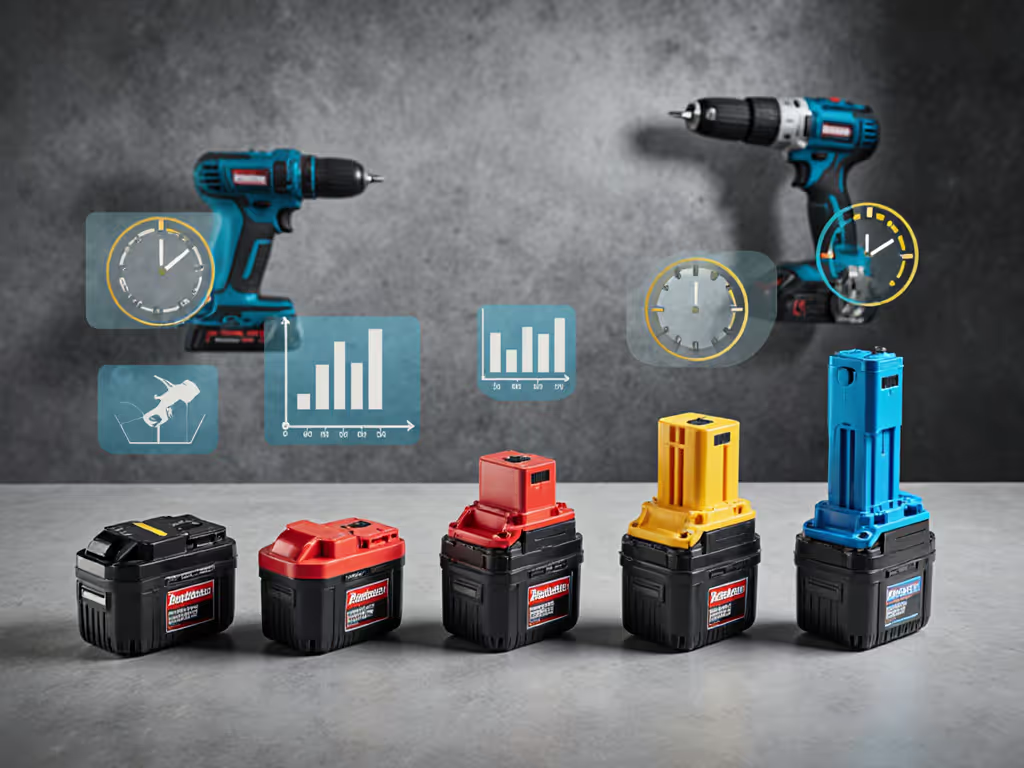
When solid-state batteries finally arrive, you won't need to replace your entire tool collection. Here's how to prepare: To choose a platform that will age well, see our job-site tested ecosystem comparison.
- Avoid cheap "bargain" batteries with proprietary connectors
- Choose platforms with modular designs (like DeWalt's FlexVolt or Makita's XGT)
- Keep batteries at 40 to 60% charge when storing long-term (preserves lithium-ion health)
- Join manufacturer beta programs to test new tech early
Remember: Start with the project, then match the drill and batteries. Don't buy a $500 platform because "solid-state is coming." Buy it because it solves today's problem reliably.
What Really Matters for Your Next Tool Purchase
The Unchanged Fundamentals
No matter how battery tech evolves, these principles remain:
- Proper bit selection prevents 90% of stripping issues
- Correct clutch setting protects materials and finishes
- Pilot holes make every fastening job smoother
- Battery rotation extends overall system life
When my neighbor finally fixed his bookshelf, we didn't need new tools, just better technique. We marked pilot holes, set the clutch to 8, and used a fresh Phillips #2 bit. For precise torque control, learn how drill clutches work and how to set them correctly. Those first four successful anchors rebuilt his confidence to tackle bigger projects.
Practical Advice for Current Tool Selection
For DIYers:
- Choose compact drills (max 7" nose-to-back)
- Prioritize visible clutch settings (not digital displays)
- Get at least two batteries in your starter kit
- Verify 3-year warranty with local service
For Pros:
- Standardize on one platform per crew
- Invest in rapid chargers (not just more batteries)
- Use serialized batteries to track usage
- Train on battery care (storage, cleaning contacts)
Looking Ahead: What to Watch For
Solid-state battery prototypes are already in testing labs, but mass production for power tools faces hurdles. Keep an eye on these developments:
- Q3 2026: First semi-solid power banks (like BMX's SolidSafe Air) may offer glimpses of the technology
- Early 2027: Potential introduction in compact tools (like 12V trim drills)
- 2028: Possible rollout in high-demand tools (impacts, circular saws)
But don't mistake incremental improvements for revolution. "Semi-solid" claims (like some 2026 power banks) still use partial liquid electrolytes, they are not true solid-state. For true next-gen drill batteries, watch for:
- Clear energy density claims (350+ Wh/kg)
- Verified cycle life data (50,000+ cycles)
- Real-world charging time tests (under 10 minutes)
Your Action Plan for Battery Confidence
You don't need to wait for future battery technology to build confidence. Here's what to do today:
- Complete one small project with your current tools (patch holes, mount a shelf)
- Document your "holes per charge" in different materials
- Clean battery contacts monthly with a pencil eraser
- Label batteries with purchase date for rotation
- Join your tool brand's user community for real-world tips
When you win the first hole, everything else becomes possible. That's how DIYers become confident makers, and how pros maintain their reputation for reliability. The most advanced battery in the world won't help if you're too overwhelmed to start.
The future of power tool energy density is exciting, but your next project is waiting right now. Evaluate tools based on what they'll do for your specific work, not speculative specs. As battery tech evolves, the fundamentals remain: proper setup, the right technique, and confidence built project by project.
Start with the project, then match the drill and batteries. Win the first hole, and confidence follows.
Related Articles