Corded vs Cordless Drills: Which Suits Your Workshop?
By Marco Silva • 12th Oct
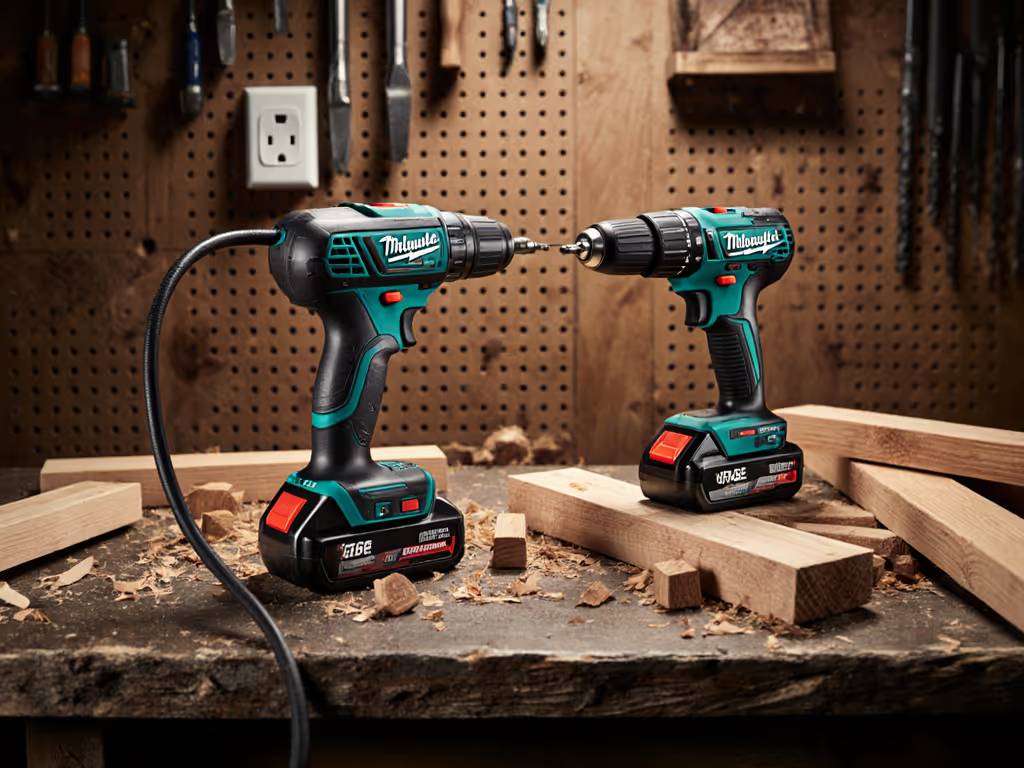
When choosing a good corded drill for your workshop, the decision isn't just about power versus portability, it's about matching your tool to your body's natural limits. Too many professionals and serious DIYers overlook the hidden cost of fatigue that builds silently through the workday. As someone who's spent decades analyzing how drill geometry impacts wrist strain and overall productivity, I'll help you navigate this crucial workshop power tool comparison with what truly matters: your long-term comfort and consistent output.
Why Your Drill Choice Is More Than Just a Simple Preference
In workshops across the country, I've watched skilled tradespeople rub sore wrists after seemingly routine tasks, ceiling installations, cabinet mounting, or just drilling dozens of holes in a single shift. The common thread isn't lack of skill or experience; it's fatigue management. And fatigue isn't just discomfort (it's a hidden cost that erodes both quality and speed without you even noticing).
Fatigue is a hidden cost that erodes quality and speed.
Your workshop is where you create, repair, and build, places where precision matters. But when your body fights your tool, everything slows down. Consider these real workshop scenarios where the wrong drill choice becomes painfully obvious:
- The overhead work struggle: When you're drilling into joists or mounting fixtures above your head, every ounce of weight compounds into shoulder strain within minutes.
- Tight-space frustration: You're trying to drill in cabinet corners or between wall studs, but your drill's head is too bulky for the space.
- The disappearing accuracy: During a long session, your once-perfect holes become crooked as your grip weakens and vibration numbs your fingertips.
- The unexplained slowdown: Your drill seems powerful during test runs but mysteriously loses speed during actual work, forcing you to apply more pressure and increasing strain.
These aren't just minor annoyances, they're productivity killers that cost you time, quality, and potentially long-term physical health. When you're evaluating a good corded drill versus its cordless counterpart, you're not just comparing specs; you're choosing how your body will feel at the end of a full day's work.
The Corded Drill Advantages You're Probably Undervaluing
Most workshop comparisons focus on raw power metrics: voltage, torque ratings, maximum RPM. But when I assess a best corded drill, I prioritize what I call "people-first metrics": how the tool behaves under actual load for actual humans working actual hours.
Continuous Power Without Performance Drop-Off Corded drills deliver consistent power without the voltage sag that plagues cordless models during sustained heavy work. When you're drilling through multiple layers of lumber, metal studs, or dense composites, you won't experience that frustrating "throttling" where cordless drills suddenly slow down as they overheat or deplete battery reserves. This consistent performance means you're not constantly fighting the tool to maintain your work rhythm.
Workshop-Specific Benefits For stationary workshop use, corded drills offer some often-overlooked advantages:
- No battery anxiety: You're not calculating "holes per charge" or scrambling to rotate batteries between tasks.
- Lower long-term cost: No battery replacements, no concerns about cold-weather performance, and typically higher build quality for the price.
- Simplified maintenance: Fewer components to fail means more reliable performance over years of workshop use.
- No charging logistics: Free up valuable workshop space that would otherwise house charging stations and battery storage.
One carpenter told me he'd switched to cordless for everything because "it's the future," only to burn through three batteries during a single deck installation project. The corded drill sat unused in his workshop while he waited for batteries to recharge between boards. That's not progress, it's productivity bleeding out through downtime.
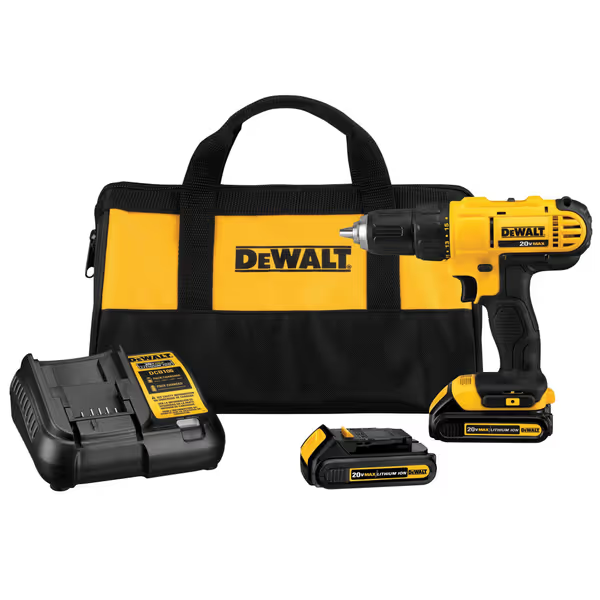
DEWALT 20V Max Cordless Drill/Driver Kit
Compact, powerful drill for diverse tasks, great value, and easy handling.
$116.75
Power Output300 UWO (Unit Watts Out)
Power Output300 UWO (Unit Watts Out)
Pros
Lightweight, compact design for tight spaces & reduced fatigue.
Strong motor handles wide range of drilling & fastening tasks.
Excellent value and durability for DIYers and pros.
Cons
Battery life feedback is mixed; some report inconsistent performance.
Customers find this cordless drill to be a quality tool that works well and is easy to use, particularly appreciating the simplicity of attaching bits. They praise its power, with one customer noting it's strong enough to drill through anything, and its lightweight design that's not too heavy to use for extended periods. Customers consider it good value for money and appreciate its durability. The battery life receives mixed feedback, with some customers reporting amazing performance while others mention issues with batteries not holding a charge.
Customers find this cordless drill to be a quality tool that works well and is easy to use, particularly appreciating the simplicity of attaching bits. They praise its power, with one customer noting it's strong enough to drill through anything, and its lightweight design that's not too heavy to use for extended periods. Customers consider it good value for money and appreciate its durability. The battery life receives mixed feedback, with some customers reporting amazing performance while others mention issues with batteries not holding a charge.
Cordless Drill Offers: Freedom With Compromises
Modern cordless technology has made impressive strides, and there's no denying the value in the cordless drill offers that dominate today's market. But let's be clear: in the workshop environment, cordless isn't inherently better, it's different, with specific trade-offs.
The Mobility Myth in Workshop Settings Many workshop owners choose cordless because "it's more convenient," but how often are you really moving from room to room during a focused workshop project? If your workspace has power within reasonable reach (say, 15-20 feet), the mobility advantage quickly becomes irrelevant while you still carry the weight disadvantage of batteries.
The Battery Ecosystem Trap For workshops looking to standardize tools, the cordless ecosystem approach makes sense (single batteries for multiple tools). But this creates hidden costs:
- Tool selection becomes constrained by battery compatibility rather than optimal tool design
- Battery degradation means inconsistent performance across your tool fleet
- Platform lock-in limits your future options when newer, better technology emerges
Real-World Ergonomic Differences This is where I need to stress the setup for workshop use. Corded drills generally offer better balance because they don't carry the weight of batteries in the handle. That weight distribution matters more than you realize when you're working overhead or making hundreds of precise holes.
When I worked with an apprentice who kept rubbing his wrist after ceiling work, we didn't just switch tools, we transformed his setup. We moved to a shorter-head configuration with better balance and added a side handle for stability. The corded drill advantages in consistent power delivery meant fewer stalls and less strain. His output rose dramatically and his pain faded. That day taught me something invaluable: fatigue costs more than another battery ever will.
Making the Workshop Decision: It's About Your Body, Not Just the Tool
So, which drill should you choose for your workshop? The answer depends on your specific workflow patterns and physical demands, not on marketing hype or peer pressure. Let's cut through the noise with safety-forward evaluation criteria:
Choose Corded If:
- You do more than 2 hours of continuous drilling work per session
- Your workshop has reliable power access within reasonable reach
- You regularly work overhead or in positions where drill weight matters
- You prioritize consistent performance over mobility
- You value long-term reliability and lower TCO (total cost of ownership)
Choose Cordless If:
- You frequently move between rooms or workspaces within your workshop
- You need to occasionally take tools outside the workshop
- Your primary use is light fastening work rather than heavy drilling
- You already have a standardized battery platform for other tools
- You have limited space for cord management or need to work away from outlets
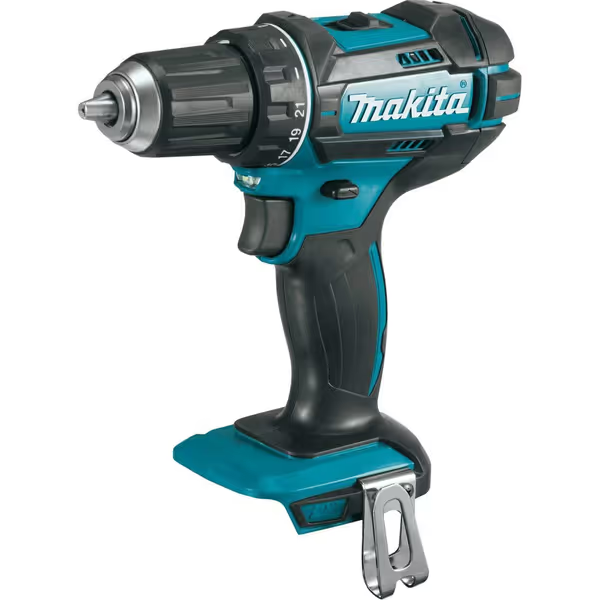
Makita XFD10Z 18V LXT Driver-Drill
Powerful, ergonomic drill tackles tough jobs with Makita LXT reliability.
$91.38
Max Torque480 in. lbs.
Max Torque480 in. lbs.
Pros
High torque for demanding tasks (e.g., 3" screws in oak).
Lightweight, ergonomic design reduces fatigue.
XPT offers enhanced dust and water resistance.
Cons
Battery not included (tool only).
Mixed durability reports; some users cite motor/brush issues.
Customers find this cordless drill excellent in quality, powerful with good torque, and easy to use, with one customer noting it's suitable for driving 3" screws into oak.
Customers find this cordless drill excellent in quality, powerful with good torque, and easy to use, with one customer noting it's suitable for driving 3" screws into oak.
Balance Beats Raw Weight: The Ergonomic Truth
When most people evaluate drills, they focus on weight alone. But in my ergonomics assessments, I've found that balance matters far more than total weight. A well-balanced good corded drill that puts the motor weight over your hand rather than at the end of the chuck will feel lighter and cause less strain than a "lightweight" cordless drill with poor weight distribution.
Key ergonomic considerations for workshop use:
- Head length: Shorter heads improve access in tight spaces without requiring awkward angles
- Grip circumference: Thinner grips reduce hand fatigue during long sessions
- Trigger placement: A trigger that aligns with finger natural position reduces strain
- Vibration control: Less vibration means less hand-arm vibration syndrome (HAVS) risk
Here's a valuable visual cue to test when evaluating drills: hold the tool in your normal working position and close your eyes. If you have to actively adjust your grip to keep it level, that's a sign of poor balance that will haunt you after just 30 minutes of work.
Remember my guiding principle: reach matters more than specs. A drill that can access your work area comfortably without straining your body will deliver better results than one with higher torque ratings that you can't properly position.
Final Verdict: Your Workshop's Best Fit
After decades of analyzing drill setups and their impact on real-world productivity, my recommendation boils down to this: For dedicated workshop use where power outlets are accessible, a good corded drill almost always delivers better long-term value and less physical strain than its cordless counterparts.
The corded drill advantages of consistent power delivery, better weight distribution, and freedom from battery management make it the superior choice for workshop-focused users who prioritize quality output over the entire workday. This isn't nostalgia for older technology, it's recognition that some applications simply benefit from a direct power connection without the compromises of battery storage.
That being said, cordless technology has improved dramatically, and if your workshop workflow involves frequent movement or you already have a robust battery ecosystem, a modern cordless drill can serve you well, especially for lighter tasks. Just be honest with yourself about how much you'll really move around during a typical project.
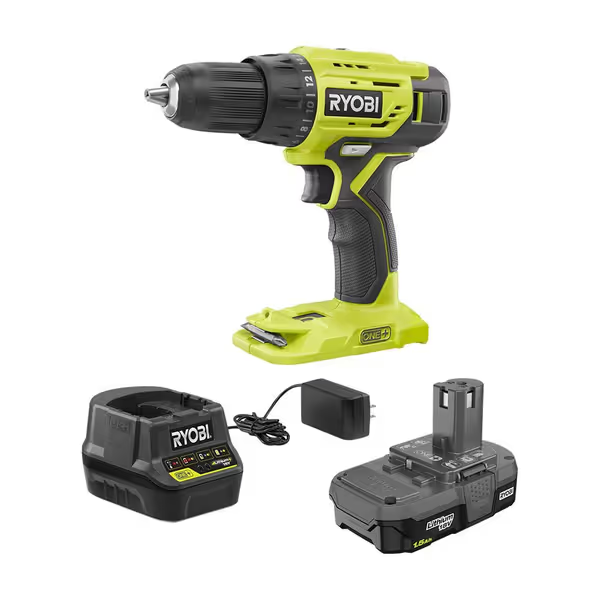
RYOBI P215K 18V ONE+ Drill/Driver Kit
Effortless drilling and driving for household tasks, maximizing productivity.
$95
Max Speed1750 RPM
Max Speed1750 RPM
Pros
Lightweight and durable design for reduced fatigue.
Good torque handles household projects efficiently.
24-position clutch for precise control.
Cons
1.5 Ah battery may limit extended runtime.
Mixed reports on battery reliability upon arrival.
Customers find the drill to be of good quality, easy to use, and efficient, with good torque that handles household projects well. They appreciate its lightweight design and durability, with one customer noting it lasts for weeks.
Customers find the drill to be of good quality, easy to use, and efficient, with good torque that handles household projects well. They appreciate its lightweight design and durability, with one customer noting it lasts for weeks.
The Bottom Line
When making your final decision, keep it clear and calm. Don't let FOMO (fear of missing out) on the latest cordless technology override your actual needs. Evaluate your typical workshop day: how many hours do you spend drilling? How often do you truly need to move beyond the reach of an extension cord? What would eliminating battery swaps and charging logistics do for your productivity?
Your hands will thank you for choosing the tool that respects your body's limits. After all, in the workshop, your most valuable tool isn't the drill, it's you. Choose accordingly, and you'll find that consistent, quality work isn't just possible, it's sustainable for years to come.
Related Articles