Best Drill for Home Renovation: Works in Tight Spaces
By Casey Bennett • 13th Oct
Introduction
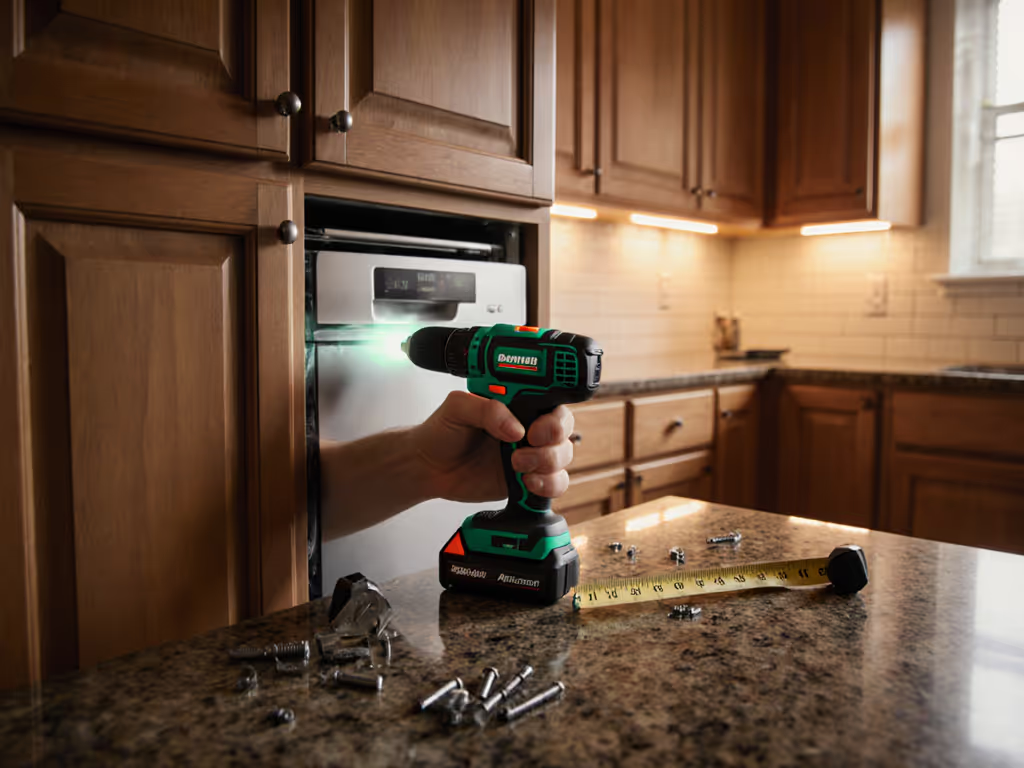
Home renovation projects often involve navigating confined areas like under sinks, between studs, or inside cabinets. For these tight spaces, a standard drill simply won't cut it. The key to efficiency and confidence lies in choosing a power drill designed specifically for accessibility challenges. By starting with your project's spatial demands first, you'll unlock smoother workflows and avoid frustrating setbacks. Let's explore how the right tool transforms cramped corners from obstacles into opportunities.
Why Tight Spaces Demand Specialized Drills
Kitchen and bathroom renovations frequently require working within 16" stud bays or behind installed cabinetry. Standard drills (typically 9" long) struggle here, leading to:
- Stripped screws from awkward angles
- Incomplete fastening due to limited reach
- User fatigue from strained positioning
Compact models (under 7") and right-angle attachments solve this by rotating the chuck 90 degrees, aligning with renovation reality. For specific model picks, see our compact drill comparison focused on tight spaces. As one DIYer discovered after struggling with vanity installations, "It was nearly impossible to get them in due to the tight squeeze" until switching to a space-optimized solution.
Step-by-Step: Selecting Your Renovation Drill
1. Measure Your Access Points
Before purchasing, document:
| Location | Minimum Clearance | Common Tasks |
|----------|----------|-------------|
| Behind sinks | 4-6" | Pipe straps, brackets |
| Between studs | 14.5" | Electrical boxes, plumbing|
| Inside cabinets | 7-10" | Slide installation |
Match these measurements to drill head length.
2. Prioritize Ergonomics
Look for:
- Pistol-grip balance (reduces wrist strain)
- Under 4 lbs weight (critical for overhead work)
- Variable clutch (prevents over-driving screws)
Remember: set the clutch before the screw. This prevents stripping and builds confidence through predictable results.
3. Validate Real-World Power
Ignore peak torque ratings. Instead, test under load:
- Can it drive 3" screws through doubled plywood?
- Does it maintain speed when boring 1" holes?
The Milwaukee M12's brushless motor, for example, delivers consistent power despite its compact size.
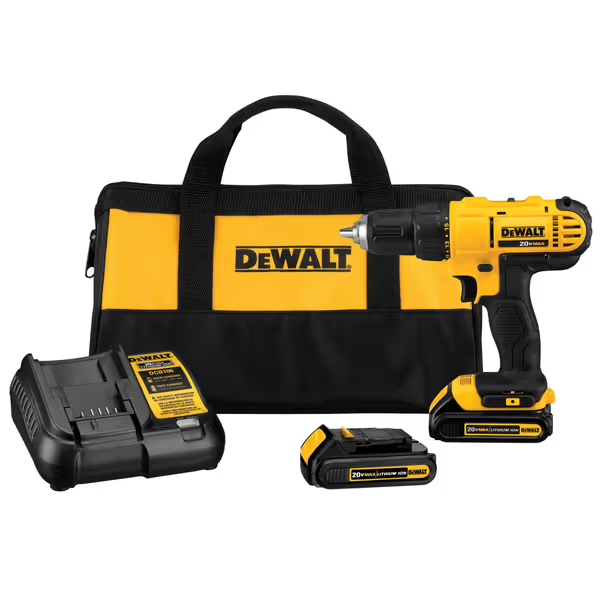
DEWALT 20V Max Cordless Drill/Driver Kit
Compact, powerful drill for diverse tasks, great value, and easy handling.
$116.75
Power Output300 UWO (Unit Watts Out)
Power Output300 UWO (Unit Watts Out)
Pros
Lightweight, compact design for tight spaces & reduced fatigue.
Strong motor handles wide range of drilling & fastening tasks.
Excellent value and durability for DIYers and pros.
Cons
Battery life feedback is mixed; some report inconsistent performance.
Customers find this cordless drill to be a quality tool that works well and is easy to use, particularly appreciating the simplicity of attaching bits. They praise its power, with one customer noting it's strong enough to drill through anything, and its lightweight design that's not too heavy to use for extended periods. Customers consider it good value for money and appreciate its durability. The battery life receives mixed feedback, with some customers reporting amazing performance while others mention issues with batteries not holding a charge.
Customers find this cordless drill to be a quality tool that works well and is easy to use, particularly appreciating the simplicity of attaching bits. They praise its power, with one customer noting it's strong enough to drill through anything, and its lightweight design that's not too heavy to use for extended periods. Customers consider it good value for money and appreciate its durability. The battery life receives mixed feedback, with some customers reporting amazing performance while others mention issues with batteries not holding a charge.
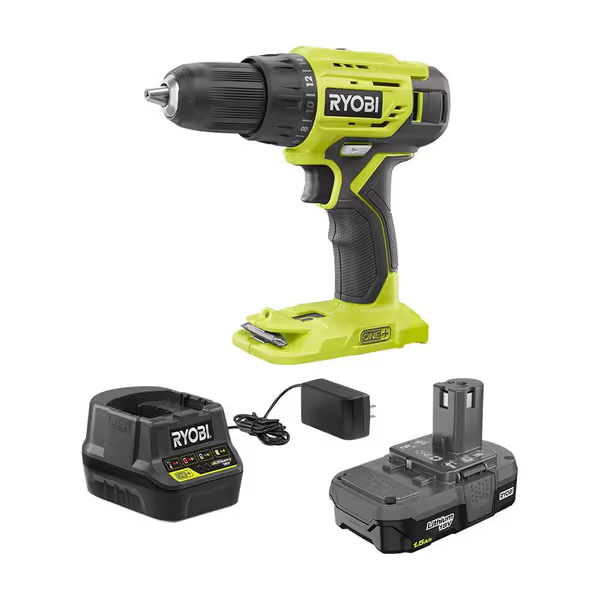
RYOBI P215K 18V ONE+ Drill/Driver Kit
Effortless drilling and driving for household tasks, maximizing productivity.
$95
Max Speed1750 RPM
Max Speed1750 RPM
Pros
Lightweight and durable design for reduced fatigue.
Good torque handles household projects efficiently.
24-position clutch for precise control.
Cons
1.5 Ah battery may limit extended runtime.
Mixed reports on battery reliability upon arrival.
Customers find the drill to be of good quality, easy to use, and efficient, with good torque that handles household projects well. They appreciate its lightweight design and durability, with one customer noting it lasts for weeks.
Customers find the drill to be of good quality, easy to use, and efficient, with good torque that handles household projects well. They appreciate its lightweight design and durability, with one customer noting it lasts for weeks.
Top Drills Compared: Performance in Confined Areas
| Feature | DEWALT DCD771C2 | RYOBI P215K |
|---------|-------------|-------------|
| **Head Length** | 6.5" | 5.7" |
| **Max Torque** | 650 in-lbs | 515 in-lbs |
| **Clutch Settings**| 15+1 | 24 positions |
| **Best For** | Heavy-duty fastening | Light/medium cabinetry |
| **Battery Life** | 30min continuous use | 25min continuous use |
DEWALT 20V Max: Power Meets Precision
Ideal for driving lag bolts or boring through joists, this tool's 1/2" chuck handles larger bits effortlessly. The high-torque motor powers through dense lumber while the textured grip maintains control. Kit includes two batteries (crucial for all-day projects).
RYOBI ONE+: Budget-Friendly Agility
With the shortest head profile in its class (5.7"), it excels inside cabinets and drawers. The 24-position clutch offers fine control for delicate finishes. While less powerful than the DEWALT, it's 25% lighter, a trade-off worth considering for overhead work.
Real Renovation Wins
One homeowner avoided abandoning a bookshelf project after repeatedly stripping screws. By switching to a compact drill with a calibrated clutch, they secured anchors perfectly on the first try. That small win unlocked a weekend of completed fixes, proof that the right tool reshapes your renovation reality.
Actionable Next Step
- Map your tight spaces using the clearance table above
- Test-grip drills at your local hardware store
- Choose one platform (e.g., DEWALT 20V or RYOBI ONE+) for battery compatibility
Pro tip: Start with a kit including two batteries. Renovations drain power faster than you'd expect!
Upgrade your toolkit today, because frustration shouldn't live in your dream home.
Compact drills turn confined spaces into conquered territories. Measure your challenges, match your tool, and let each snug-fit success build your DIY confidence.
Related Articles